| The viola d’amore is one of those colorful “accessory” instruments so popular with Baroque composers. Played under the chin like the violin, it has six or seven sympathetic strings running under the fingerboard that are responsible for the instrument’s characteristic silvery sound. Like the oboe d’amore and the voice flute, the viola d’amore was newly invented; it came into use during the second half of the 17th century, but never became a permanent member of the orchestra. Bach, Telemann, Vivaldi, and Quantz wrote sparingly for the viola d’amore, but it dropped out of sight during the Romantic era. Surprisingly, the instrument has persisted until the present day; composers as diverse as Strauss, Janácek, Hindemith, Martin, and Villa-Lobos have been attracted to its gentle, ethereal sound. 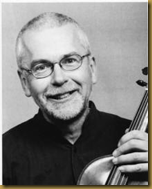 Thomas Georgi is an American who performed with the Queensland Symphony Orchestra of Australia for many years, and since 1989 has been a member of the Tafelmusik Baroque Orchestra of Toronto. After joining that group he began to champion the viola d’amore, and has recorded two previous volumes of Ariosti for BIS. Georgi is joined by two excellent instrumentalists, lutenist Lucas Harris and gambist Mimi Yamahiro Brinkmann, and the renowned English soprano Dame Emma Kirkby. The performances are models of their kind, with colorful, expressive playing from Georgi, and first-rate contributions from the two continuo players. I applaud the decision to employ archlute (theorbo) and guitar as continuo instruments; a harpsichord would have overwhelmed the delicate sound of the viola d’amore. Of particular interest is the cantata—it demonstrates that Dame Emma’s voice is as beautiful and controlled as ever, even after nearly 40 years before the public. Thomas Georgi is an American who performed with the Queensland Symphony Orchestra of Australia for many years, and since 1989 has been a member of the Tafelmusik Baroque Orchestra of Toronto. After joining that group he began to champion the viola d’amore, and has recorded two previous volumes of Ariosti for BIS. Georgi is joined by two excellent instrumentalists, lutenist Lucas Harris and gambist Mimi Yamahiro Brinkmann, and the renowned English soprano Dame Emma Kirkby. The performances are models of their kind, with colorful, expressive playing from Georgi, and first-rate contributions from the two continuo players. I applaud the decision to employ archlute (theorbo) and guitar as continuo instruments; a harpsichord would have overwhelmed the delicate sound of the viola d’amore. Of particular interest is the cantata—it demonstrates that Dame Emma’s voice is as beautiful and controlled as ever, even after nearly 40 years before the public.
|


 the first 7 of the 15 ‘sonatas’ contained in the Receuil, leaving the remainder for a final, third volume in the series. Thomas Georgi’s Viola d’amore has an ‘alto’ pitch range, but while the general tessitura is lower than a violin, the colour is in fact quite bright. The strings have a thicker, more throaty texture in tone, but the overall effect is highly attractive, and the balance between violoncello and lute, the glue which links the two, is nicely struck. I note that these have been recorded in a different acoustic to volume one, but Bis’s reliably wonderful recording techniques have created another winning balance between close detail and spaciousness.